
Our best practices
Design First Methodology
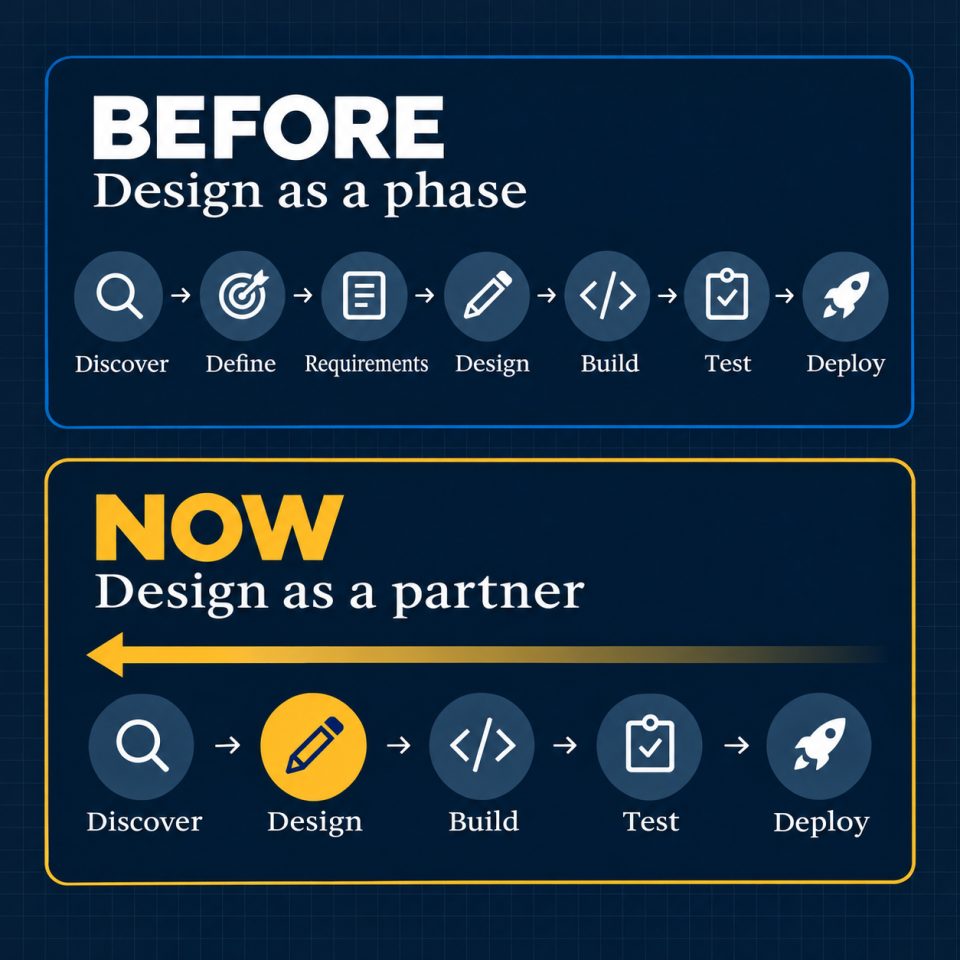
Bring the right questions forward
Design First brings product thinking, user understanding, design, and validation into the earliest stages of delivery. It creates space to understand the problem, explore possible solutions, and test important assumptions before significant development begins.
The aim is a clearer product decision: what to build, who it should serve, and what success should look like. A prototype or an early design can make that decision easier to discuss, test, and refine.
A practical path from questions to direction
- Understand the problem. Bring together business goals, user needs, and the context in which the product will be used. Identify the assumptions that need evidence.
- Define the product direction. Agree on the audience, the intended outcomes, and the scope worth exploring first. Make priorities and constraints visible.
- Make the experience tangible. Map important journeys, explore design options, and create prototypes that help people respond to a concrete experience.
- Validate and refine. Test the most important assumptions with users and stakeholders. Use what you learn to improve the experience and reconsider scope where needed.
- Prepare for delivery. Bring the validated direction, design decisions, and open questions into planning with the development team.
What this brings into focus
Early design and validation help a team discuss more than a feature list. They help make the following decisions explicit:
- The user problem and the value the product should provide.
- The journeys and capabilities that matter most.
- The assumptions that have been tested and those still to explore.
- The scope of an initial release and the reasons behind it.
- The questions that need technical investigation before delivery.
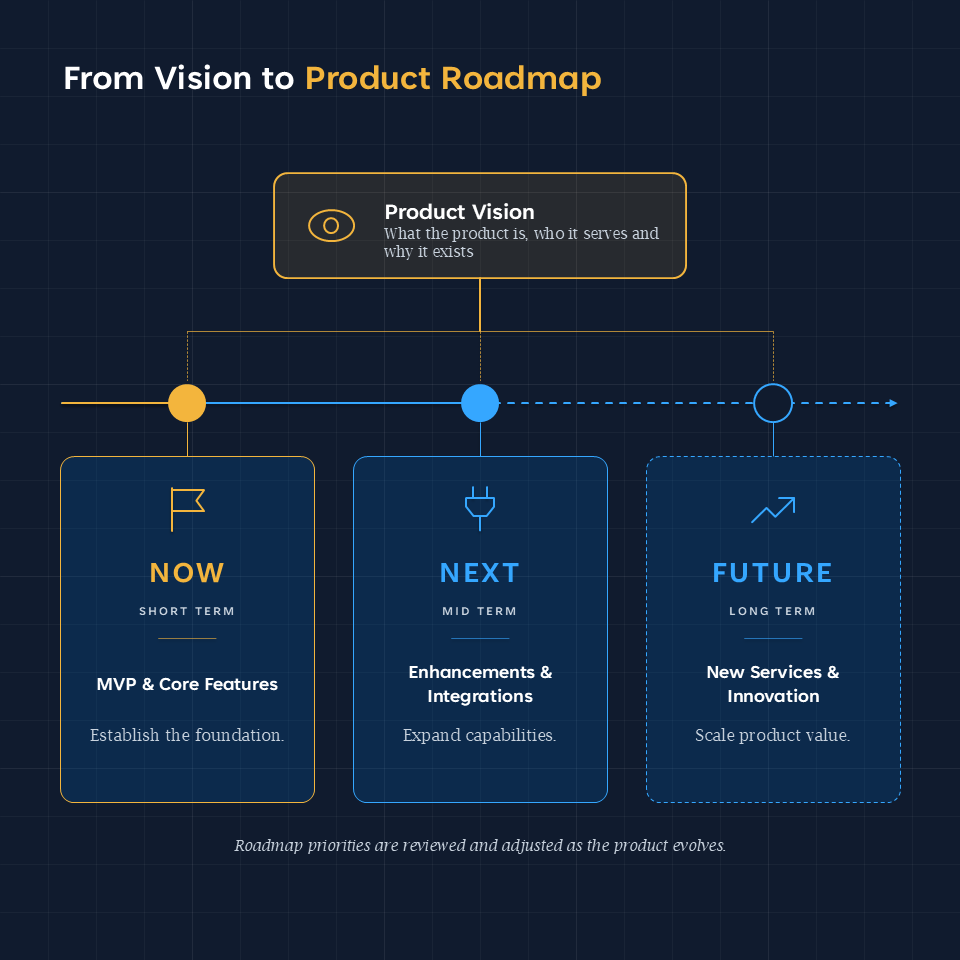
Design and engineering work together
Design First does not mean completing every design decision before engineers become involved. Early collaboration with engineering helps teams consider feasibility, integrations, accessibility, and delivery constraints while options are still open.
Research and validation continue as the product evolves. What is learned during delivery and after release informs the next set of product decisions.
Start with a clearer product decision
Whether the work concerns a new product, a new service, or an existing experience, begin by making the key questions visible. Use design and validation to build a shared direction before committing to significant development.